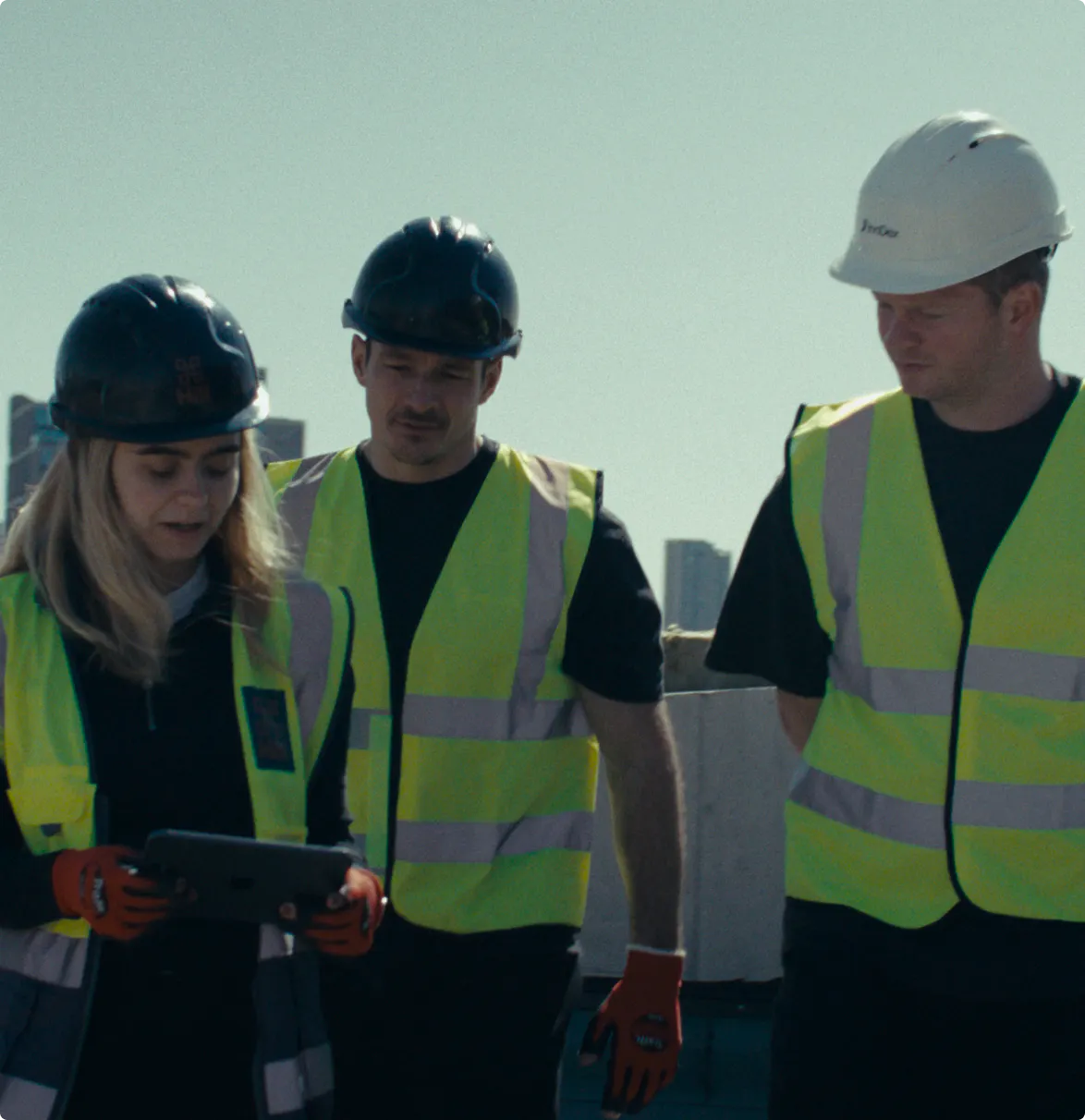
Not everyone who steps onto a construction site needs a full site induction. But everyone needs to be safe, accounted for and properly briefed.
Until now, there has been a gap between a fully fledged operative induction and a simple visitor sign-in. Operatives complete a comprehensive digital induction. Guests, on the other hand, often sign in with little more than a name entry. There is limited tracking, no structured briefing and very little data captured. In many cases, sites manage this process on paper, which creates risk, reduces visibility and leaves no clear audit trail.
Guest Access on the innDex platform has been introduced to solve this problem.
Built directly into innDex innTime, an application used to clock in and out, Guest Access provides a lightweight, configurable induction flow for non-regular site attendees. It brings structure, compliance and safety to temporary visitors without slowing down the process or forcing them through a full operative induction.
Bridging the Gap Between Sign-In and Full Induction.
Guest Access sits between two existing processes. It is more robust than a basic clock-in, but more streamlined than a full induction. The result is a process that captures the right information, delivers the right briefing and ensures every guest is properly logged.
When a guest arrives on site, they use the same clocking board as everyone else. Operatives clock in as normal through facial recognition or manual entry. Guests simply select the guest option within InTime and begin their induction journey.
There are currently two guest types: Visitors and Drivers.
Visitors are typically individuals who will be escorted around site. This could include executives, work experience students, inspectors or other temporary attendees. Drivers are those arriving to deliver or collect materials who are not carrying out physical work on site. They may be unescorted but still need to understand traffic routes, restricted areas and key safety rules.
Each type has its own configurable induction stream, allowing projects to tailor the content appropriately.
How the Process Works.
For first-time guests, the experience is designed to feel simple and familiar. On arrival, they’re guided through a few quick details about who they are and the purpose of their visit This is similar to signing in on a digital table at a reception desk, but with added structure and safety built in.
They’re then introduced to a short, site-specific briefing that clearly explains anything they need to know before heading in. This might include important safety information, key site rules, or restricted areas, shared in an easy-to-digest format such as a short video or document. Some sites may also include a quick knowledge check to make sure everything is clear and understood.
Once that’s done, guests can begin their visit straight away. The process also includes a photo for added security, helping sites keep an accurate and reliable record of who is on site at any time. Where enabled, this can make signing out just as quick and seamless at the end of the visit.
For returning guests, it’s even easier. The system remembers their details, so they can confirm or update their information in seconds and get on with their visit. There’s no need to repeat anything unnecessarily, making future visits swifter while still maintaining the same high standards of safety and compliance.
Improving Compliance, Reducing Risk.
One of the most significant benefits of Guest Access is improved compliance. Every guest is digitally logged, inducted and recorded. There is clear visibility of who is on site and confirmation of what safety information has been provided. This creates a reliable audit trail and removes reliance on paper-based systems.
From a risk perspective, this is a major step forward. Guests are no longer arriving on site without a structured safety briefing. They are informed of site-specific hazards, emergency procedures and any areas they must avoid. In the event of an incident, there is clear evidence that appropriate information was delivered.
Guest Access also improves the overall user experience within InTime. The flow is seamless, integrated and designed to reduce time at the gate. Everything is completed in one journey, from registration to induction to clock-in. At the same time, projects gain better data capture and real-time visibility of guest attendance.
Configurable Per Project.
While Guest Access currently supports two core streams, Visitor and Driver, the content within each is entirely configurable per project. This means clients can tailor briefings to reflect site-specific requirements while keeping the structure simple and consistent.
The result is a neater, more controlled approach that meets the core demand without creating unnecessary complexity.
A Smarter Approach to Temporary Site Access.
Construction sites are busy, high-risk environments. Even short-term attendees need to be managed properly. Guest Access ensures that visitors and drivers are not overlooked, without adding friction or administrative burden.
By introducing a lightweight induction process, innDex is strengthening compliance, improving visibility and reducing risk across projects. It is a practical, scalable solution that fills a long-standing gap between basic sign-in and full induction.