Why Digital Permits Are Transforming Safety and Compliance in Housebuilding with Paul Dyster, Hill Group.
Permits have always been a cornerstone of safe construction. Whether it’s hot works, electrical jobs, or other high-risk activities, the principle is simple: no one should carry out dangerous work without a permit in place.
But as anyone who has worked on site knows, the way permits have traditionally been managed often made them impractical and all too often, ignored. We sat down to discuss with Paul Dyster, Group HSE Director at Hill Group, a leading UK housebuilder that specialises in developing homes across London and the south.
The Problem with Paper Permits.
On paper (literally), the old system looked straightforward: fill out a form in the site office, check the paperwork, and issue a permit before work could begin.
In reality, it was broken. Picture a plumber working on the 17th floor of a high-rise who suddenly needed a hot works permit. To do it “by the book,” the operative and site manager would have to walk all the way down to the office, fill out the paperwork, and trek back up. That could take 30 minutes or more.
Faced with this friction, people defaulted to shortcuts, telling workers to crack on and promising to sort the permit later. The result? Unrecorded jobs, gaps in compliance, and risks left unchecked. Paper processes didn’t just waste time; they undermined trust in the system itself.
How Digital Permits Change the Game.
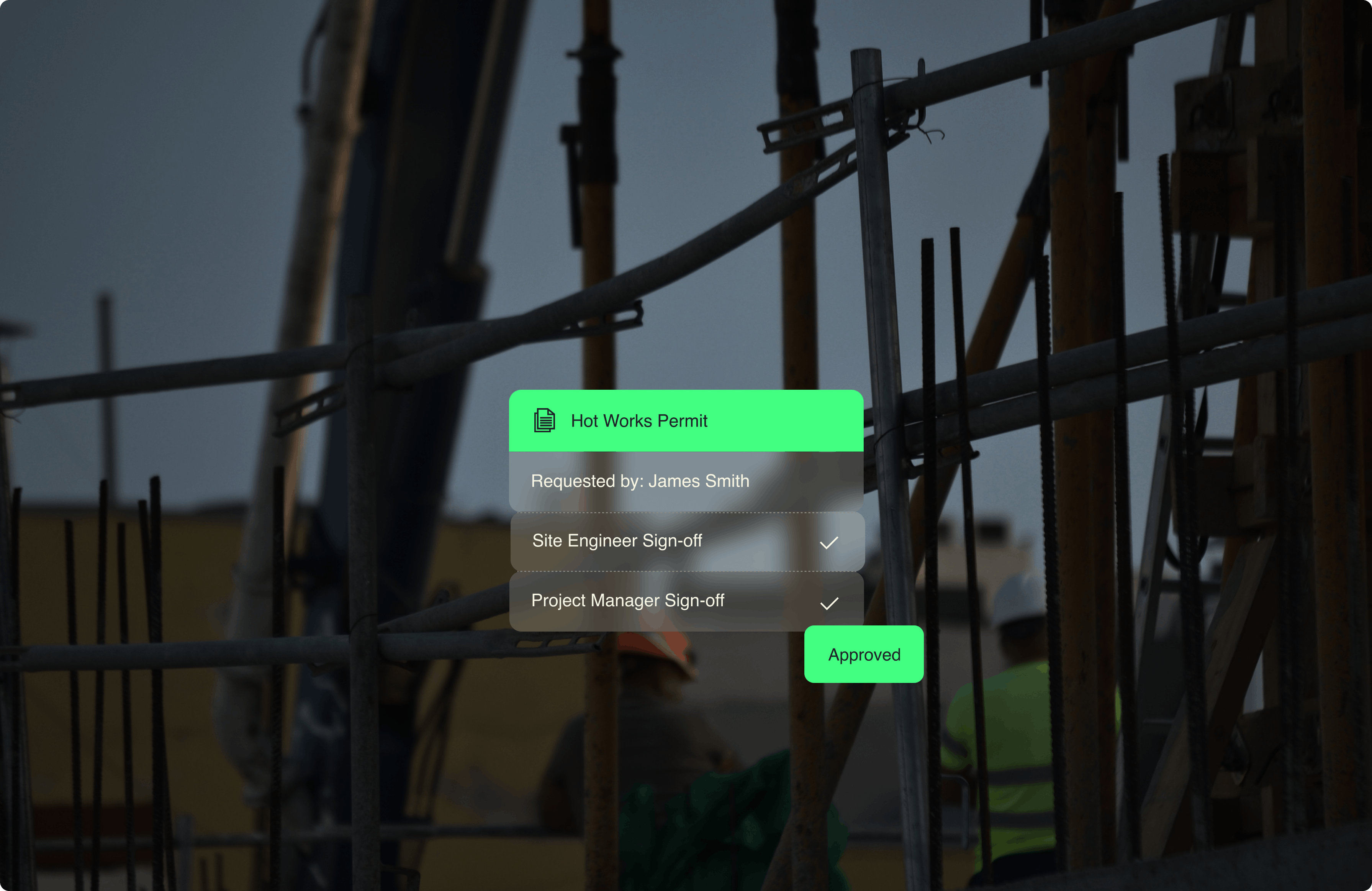
Now, with digital oversight, the process looks very different. Permits can be created, reviewed, and signed off on the spot, directly from a phone or tablet.
That change is more than convenience. It means:
- Permits are actually used, because they fit naturally into site workflows.
- Approvals are tied to competence records, so only qualified people can take on high-risk tasks.
- Photos and updates can be added in real time, creating a transparent audit trail.
- Every site operates to the same standards, eliminating inconsistency.
What once took half an hour and a long walk now takes minutes, without leaving the work area.
Compliance That Sticks and Proves Itself.
After Grenfell, the industry’s responsibility to demonstrate competence and compliance has only grown. And with the creation of the New Homes Ombudsman Service (NHOS) in 2022, the bar has been raised even further.
Under the New Homes Quality Code, builders must show that they’ve handled complaints properly and maintained high standards throughout the build process. Having a clear, digital record of permits including who requested them, who approved them, and whether the work was completed safely, gives builders the evidence they need to stand up to Ombudsman scrutiny if disputes arise.
It’s not just about protecting the company either. This transparency helps reassure customers that their homes were built with consistent checks in place, not shortcuts or guesswork.
Shifting Culture, Not Just Systems.
The most powerful shift isn’t just procedural, it’s cultural. With paper, safety checks often felt like an obstacle to getting work done. With digital, the safest option is now the fastest and easiest option too.
That shift changes the conversation on site. Safety stops being a tick-box exercise or an inconvenience. It becomes part of how workflows are embedded naturally into the day. And when safety is that simple, it sticks.
Digital permits aren’t just a new tool. They represent a new way of thinking about compliance, one that makes life easier for operatives and managers while giving housebuilders the transparency and assurance they need. In a world of rising accountability, from Ombudsman requirements to customer expectations, they’re not just nice to have. They’re essential.
At innDex, we’re working with forward-thinking builders like Hill Group to make permits simple, digital, and effective.
Want to learn more? Let’s talk.
Looking to streamline your site processes with digital tools?
Get in touch to find out how innDex could help.