Women in Construction Week, running 1st to the 7th of March, is a moment to celebrate the women who are shaping the built environment, often in roles people still do not immediately picture when they think of construction. It’s also a chance to share the stories behind the hard hats and high-vis, the everyday decisions, the leadership, the quiet confidence, and the determination that keeps projects moving safely and successfully from start to finish.
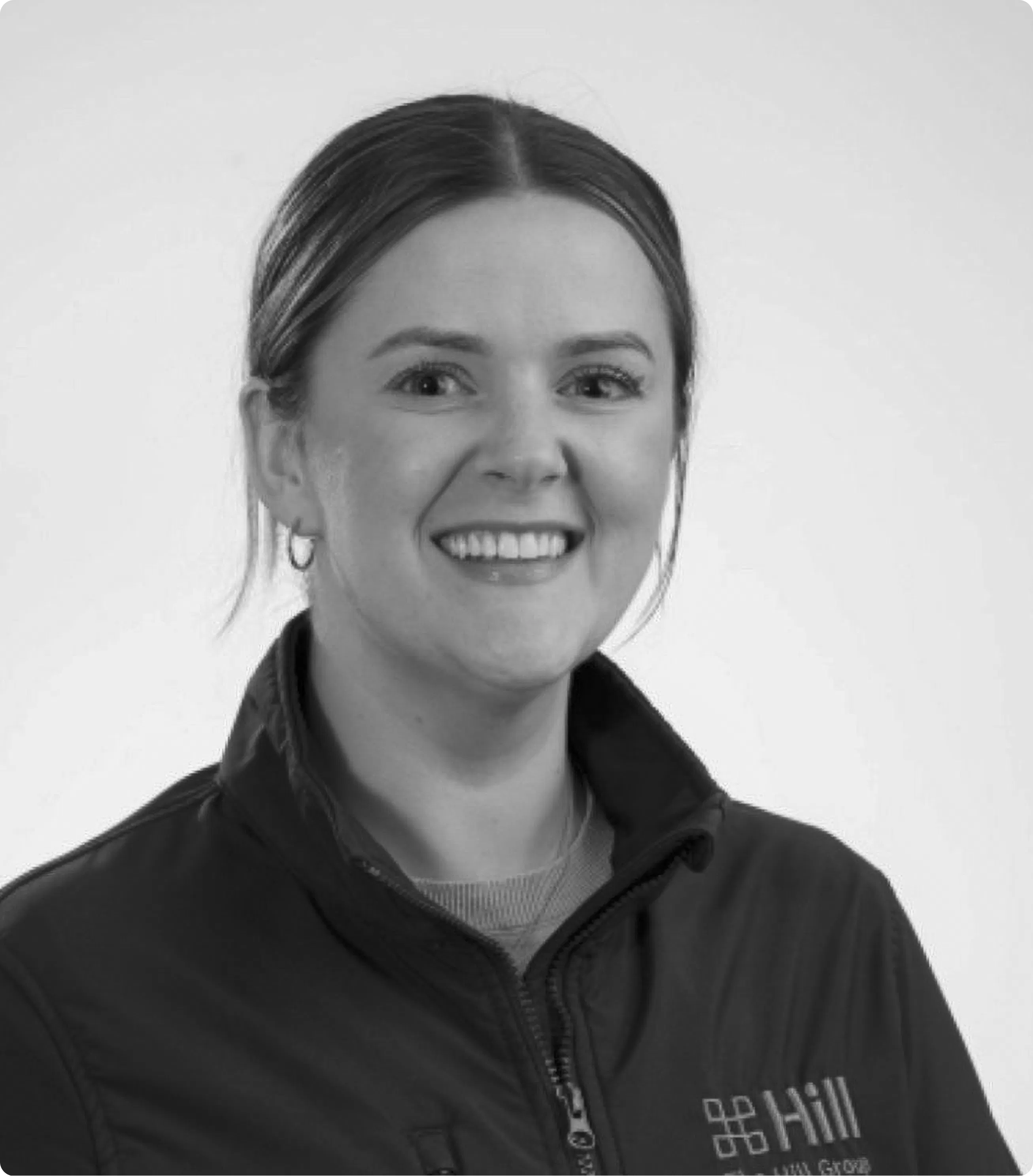
Vicki Walsh, Senior HSE Manager at Hill Group, is exactly that kind of story.
She didn’t grow up with a set plan to work in construction. She didn’t arrive in the industry feeling like the most confident person in the room. But over 12 years, Vicki has built a career that has taken her from studying occupational safety and health in Ireland, to stepping onto London sites for the first time, to becoming a senior voice in a team that is helping set the standard for how people feel supported, included and able to thrive on site.
Her journey shows what Women in Construction Week is really about: women carving out space, building expertise, backing themselves, and then reaching back to make the path easier for the next person coming through.
From “I’ll give it a go” to a career on site.
Vicki’s route into construction was not mapped out from the start. She studied Occupational Safety and Health at university in Ireland, initially drawn to the healthcare side of the profession after working as a care assistant in a nursing home. Construction was not necessarily the end goal.
When she graduated, she found herself back in the West of Ireland wondering what came next. Opportunities were limited locally, then a friend called about a health and safety consultancy in London looking to take on graduates.
Vicki describes herself as a homebird. She fully expected it to be a short-term move, six weeks perhaps, just to try it out.
That was 12 years ago.
Discovering the pull of construction.
That consultancy role exposed her to a range of sectors, but construction quickly stood out. Faced with the choice between specialising in fire safety or construction safety, she found herself drawn to the pace and variety of working on site.
Every day was different. Different projects, different teams, different challenges. She was not tied to a desk. She was out on site, meeting people, learning how buildings came together from the ground up.
What began as unfamiliar territory soon became fascinating. To do health and safety well in construction, you cannot operate in isolation. You need to understand the build process, what is happening this week, what is planned next week, and how decisions on the ground impact safety. That constant learning, that curiosity about how things are built, is something Vicki still values today.
There is also a deep sense of satisfaction in seeing a project through. Watching a site transform from demolition or bare ground into homes or buildings people will use and live in is something she never takes for granted. Being part of that journey, and knowing it was delivered safely, brings a quiet pride that not everyone associates with health and safety, but one she feels strongly.
Building confidence in a male dominated space.
After several years, Vicki moved to a different consultancy looking for a new challenge. She found one.
This time, she was largely on her own. Visiting multiple sites a day, travelling long hours, auditing, reporting, then moving on again. Her colleagues were spread across the country and met only occasionally. She was the only woman in her team.
On top of that, she was the health and safety advisor. In a male dominated industry, that combination can be daunting. Not everyone is delighted to see health and safety walking onto site, and earning trust takes time.
Vicki is open about the fact that she was not naturally the most confident person. At school she would happily sit at the back and keep her head down. Construction did not allow that. It pushed her to speak up, to challenge where necessary, and to communicate clearly and calmly in environments that could be intense.
That period was lonely at times, but it was formative. It forced her to grow into her voice, and that growth has shaped the leader she is today.
Choosing culture and connection at Hill Group.
After five years of working largely independently, Vicki realised she wanted something different. She did not want to be the person who arrives on site, highlights issues, and leaves. She wanted to work with teams, to build relationships, and to feel part of something.
Hill Group felt different from the outset.
Vicki had visited Hill sites in her consultancy role, as Hill had been a client. She had already experienced the culture. Managers were respectful, approachable, and supportive. For a woman working in construction health and safety, that kind of environment stands out.
When she spoke to Paul about joining, she was clear that Hill was somewhere she had always hoped to work because of the people.
Four years on, she is Senior HSE Manager in a team of five, with a healthy gender balance and a collaborative dynamic. They meet monthly, speak regularly, and support one another across regions and projects. Even in a largely remote working environment, there is consistent interaction and space for questions.
For Vicki, that sense of connection is crucial. She knows from experience how isolating the job can feel without it. She is intentional about making sure newer team members feel comfortable picking up the phone, asking questions, and learning openly. Confidence, she believes, grows much faster in an environment where support is visible and accessible.
Progress you can see, and progress still to make.
Over the last decade, Vicki has seen real change across sites. There are more women in a range of roles, from trainees to managers. Facilities have improved, with women’s toilets and changing spaces now standard rather than an afterthought. Small practical changes, such as secure lock boxes for female facilities rather than having to request keys in a busy office, remove unnecessary discomfort and make daily life on site easier.
Hill’s trainee programmes are another encouraging sign. Young women are joining in technical, commercial and site management roles, building experience early and progressing through the business. That pipeline is essential. It creates visibility, and visibility changes perception.
There is still work to do in the wider construction industry. Vicki highlights something as practical as PPE. Female specific PPE exists, but supply does not always match demand. When women are left wearing ill-fitting men’s gear because it is more readily available, it is a reminder that inclusion is not just about hiring. It is about ensuring the fundamentals genuinely work for everyone on site.
Advice for the next generation.
When asked what she would say to young women considering construction, Vicki keeps it simple.
Build your confidence, even if it does not come naturally. Exposure helps, so seek out work experience, apprenticeships, and opportunities to get onto site. Ask questions constantly. The more you understand the process, the more assured you will feel.
She also challenges one of the biggest misconceptions about the industry. Construction is far broader than many people realise. It is not only about physically demanding trade roles. There are technical, commercial, management, health and safety, customer care, and leadership paths, many of which are hands-on in impact without being physically intensive.
And for those who do want to pursue a trade, she is clear that there is space there too. The industry is calling out for new talent, and there is no reason women cannot step into those roles.
Why stories like Vicki’s matter.
Women in Construction Week is about more than statistics. It is about real experiences. It is about hearing from women who have navigated uncertainty, built confidence, and found genuine satisfaction in their work.
Vicki’s story is not one of overnight transformation. It is one of steady growth, strong relationships, and choosing environments where respect and teamwork are part of the culture. It is about finding pride in seeing a project through safely from start to finish. It is about learning every day and encouraging others to do the same.
Most importantly, it is about visibility.
Because when women see leaders, managers, and site professionals who look like them, speak honestly about their journeys, and clearly enjoy what they do, construction stops feeling like an unlikely path and starts feeling like a real possibility.
And that is exactly what Women in Construction Week is here to celebrate.