A practical perspective from Adrian Bracken, Environment, Health and Safety Manager
Ask anyone in construction whether communication matters and you’ll get an immediate yes.
Ask them what good site communication actually looks like, and the answers become far less clear.
- Posters.
- Briefings.
- Toolbox talks.
- WhatsApp groups.
- Emails no one reads.
After more than 20 years working in health and safety on both the principal contractor side and alongside subcontractors, Adrian Bracken, Environment, Health and Safety Manager at AB&H Safety Services has seen all of it. And in his view, most site messaging doesn’t fail because people don’t care. It fails because it isn’t designed around how sites really operate.
“The environment on a construction site is constantly changing. If your communication doesn’t change with it, it stops being useful.”
Great site messaging isn’t about volume, branding, or even technology. It’s about discipline, relevance and timing.
Start with reality, not procedure.
One of the biggest mistakes teams make is treating communication as a procedural task. Something that happens because it’s on a checklist, rather than because it serves a purpose.
In reality, the site rarely matches the paperwork.
- Trades overlap.
- Sequences change.
- Programmes compress.
- Unexpected constraints appear.
When messaging ignores those realities and sticks rigidly to generic statements, it quickly loses credibility with the workforce.
People don’t disengage because they’re reckless. They disengage because the information no longer reflects what they’re dealing with in front of them.
Great site messaging starts with a simple question: what has changed today that affects how people work safely?

Context matters more than content.
A recurring theme in Adrian’s experience is the difference between information being sent and information being understood.
He’s seen plenty of examples where a hazard board is photographed and distributed with no explanation. Technically, communication has happened. Practically, nothing has been clarified.
“Taking a picture without any detail doesn’t give you a great deal.”
What makes messaging effective is context. Why does this hazard matter today? Who does it affect? What needs to be done differently as a result?
When people understand the reason behind a message, they’re far more likely to adjust their behaviour. Without that context, communication becomes just another thing to scroll past.
Design for the people who aren’t in the room.
Daily briefings remain one of the most important safety controls on site but they are not perfect.
Attendance is never guaranteed. Supervisors may be pulled elsewhere. Subcontractors may arrive late or leave early. Entire teams can miss critical information through no fault of their own.
Great site messaging assumes this will happen and plans for it.
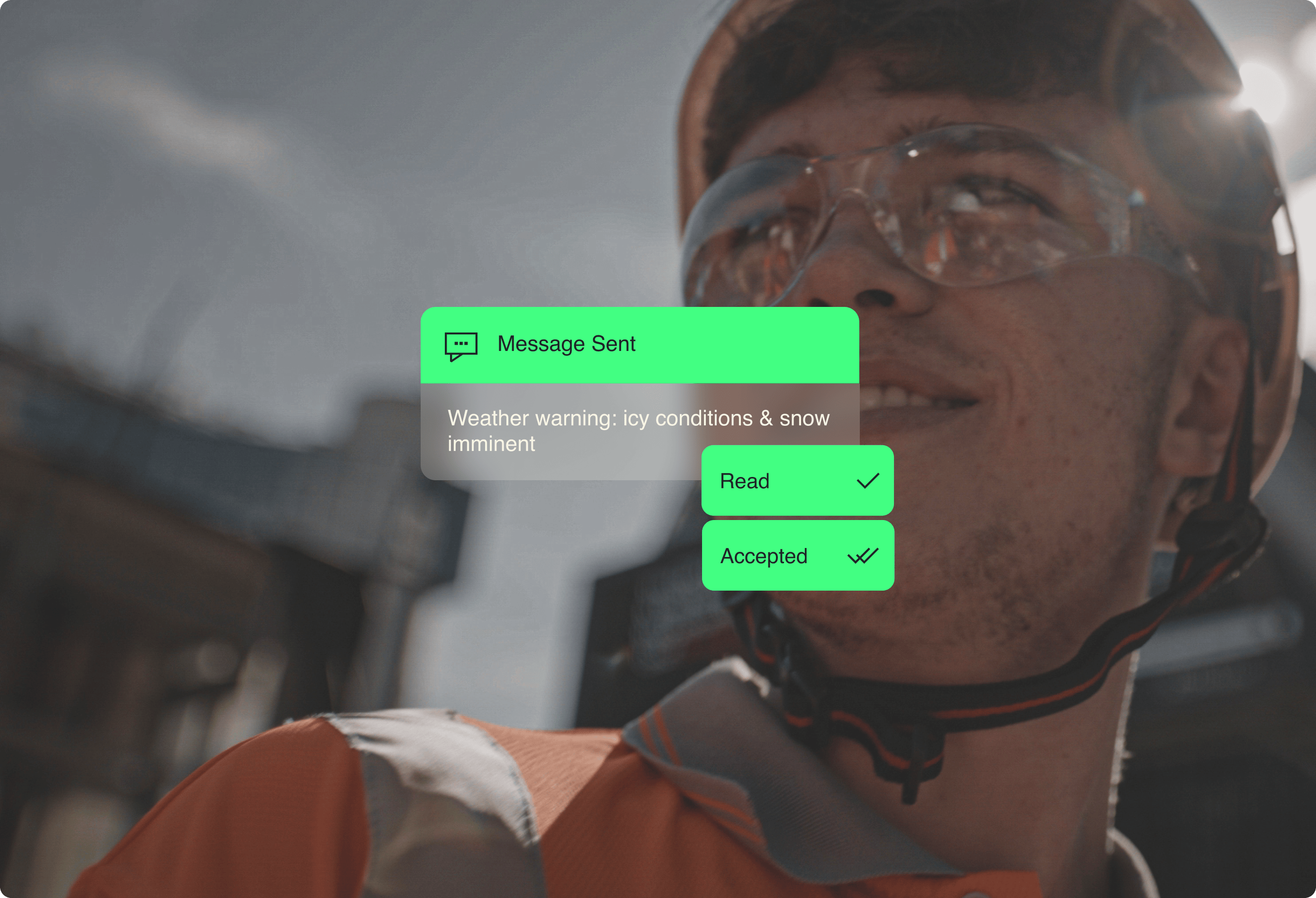
“You’ll never be able to bring everybody to the table. At least this way, you can still get the message out.”
When key information only exists in a single moment, a single meeting, it creates unnecessary risk. Effective messaging extends the life of that conversation beyond the room, ensuring that those who missed it are not left exposed.
Keep it short enough to be read but clear enough to matter.
There’s a temptation in safety to over-explain. To add detail in the name of completeness.
In practice, overly long messages rarely get read properly, especially on a phone, in a live working environment.
The most effective site messages are concise, focused, and intentional. They don’t try to cover everything. They cover the right thing.
This is the same thinking Adrian applies to work activity plans. When safe systems of work are stripped down to what actually matters for the task at hand, people engage with them. When they’re bloated, they don’t.
Site messaging follows the same rule.
Consistency builds trust.
One-off bursts of communication don’t change behaviour. They create spikes of attention, followed by long periods of silence.
Over time, that inconsistency teaches people that messages are optional.
What works far better is a steady rhythm. Not constant noise, but predictable, relevant communication that people come to expect and rely on.
“If you’re not talking to these people, they’re not listening.”
Consistency signals intent. It shows that safety isn’t something that appears after an incident and disappears once the pressure drops.
Approachability is part of the message.
How communication feels matters just as much as what it says.
When messaging is overly formal, impersonal, or one-way, it reinforces the idea that safety is something being done to people, not with them.
Adrian is clear that approachability changes engagement. Even if people never respond directly, knowing that communication is open and human lowers the barrier to speaking up when it matters.
“If people feel you’re approachable, they’re more likely to engage. Even if they never actually do.”
That sense of openness doesn’t come from policies. It comes from tone, consistency, and follow-through.
The outcome that actually matters.
Great site messaging doesn’t eliminate risk. Construction will always involve uncertainty.
What it does do is reduce ambiguity.
When people know what’s changed, what’s expected, and where to go if they’re unsure, they make better decisions, even under pressure.
And in an industry where behaviour is the last line of defence, that clarity is one of the most powerful safety tools we have.

Ready to transform your site messaging processes?
Get in touch to see if innDex is a right fit.