.svg)




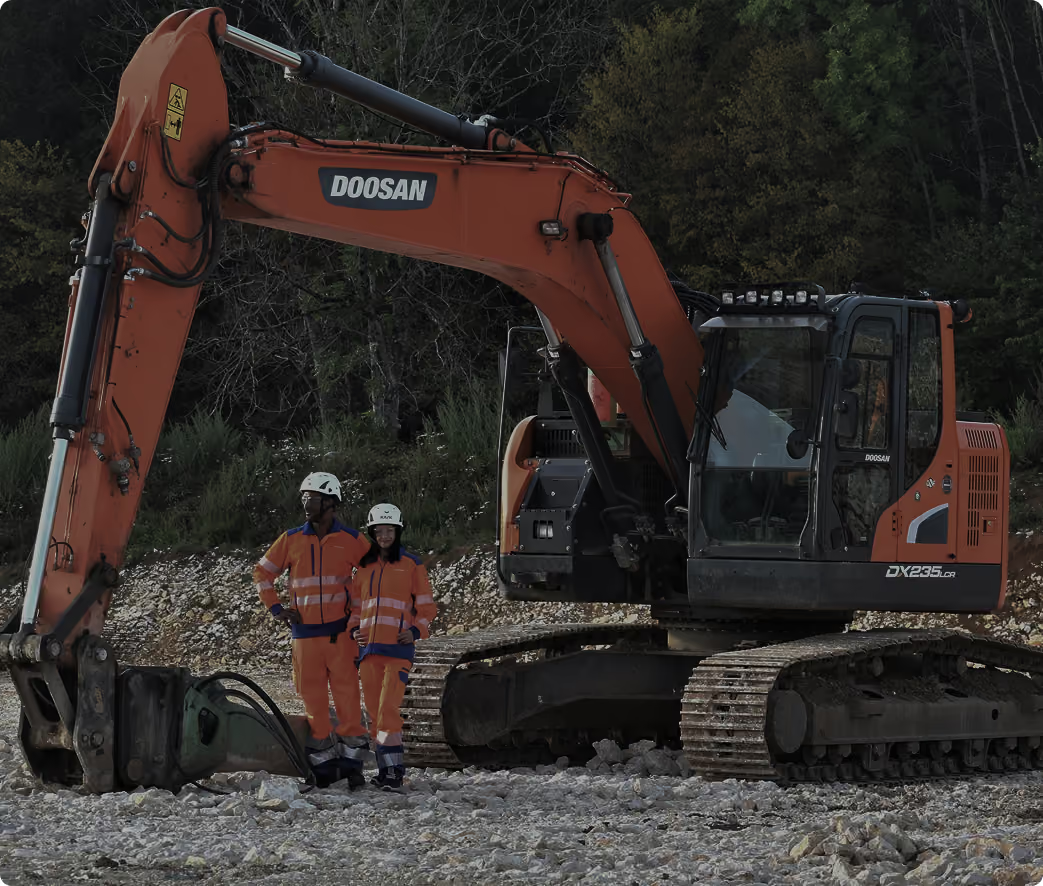
We have enhanced our Asset Management tool to give users greater capability to track, manage and audit assets over the long term, across multiple projects within a company.
This elevates the current project-based approach into a company-wide system, providing a much bigger picture of asset performance, history and compliance. Instead of asset data being tied to a single project lifecycle, it now becomes part of a continuous, centralised record that grows in value over time.
1. Why the change?
As companies run more projects on innDex, we're seeing the same pattern.
Multiple projects. Same company. Same assets. Managed separately, project by project.
That means duplication. The same asset logged again on every new project it's used on. And when a project finishes, its inspection and fault history goes with it even though the asset is still in use elsewhere.
This update solves that. You can now create an asset once and assign it across multiple of your own projects, keeping its full history at a company level instead of starting from scratch each time.
2. How it works
Every company who uses innDex will now have a central asset repository in the Company Portal.
This means that assets are created once, at company level, using the same familiar workflow. From there, they can be assigned to any project, quickly and consistently.
Project-level asset creation still exists for flexibility. So if you’re dealing with short-term hire or third-party assets, you can manage them locally. But if the system spots a match (same type, serial number, or registration), it will prompt you to use the existing company asset instead of creating a duplicate.
From the Company Portal, you get the full picture:
- Where each asset has been used
- When it was on-site
- All inspections and certifications
- Full asset history
Project teams can still update certificates on-site, and everything syncs back to the central record automatically.
Core details stay locked at company level. So your data stays clean, consistent, and reliable across every project.
3. What does it mean for you?
Less admin. More control. Better decisions.
You no longer need to recreate assets across projects. That’s time back for your team and fewer chances for errors to creep in.
You get a full lifecycle view of every asset: how it’s used, how it performs, and whether it’s compliant. Not just on one job, but across all of them.
With everything in one place, patterns start to show. You can spot issues earlier, track performance over time, and make smarter calls on maintenance, hire, or redeployment.
And because everyone’s working from the same data, collaboration improves across projects and across the supply chain.
It’s one source of truth for your assets.
And it’s a big step towards a more connected, more efficient way of working.