.svg)




SUPPORTING THE REALITIES OF RAIL WORK.
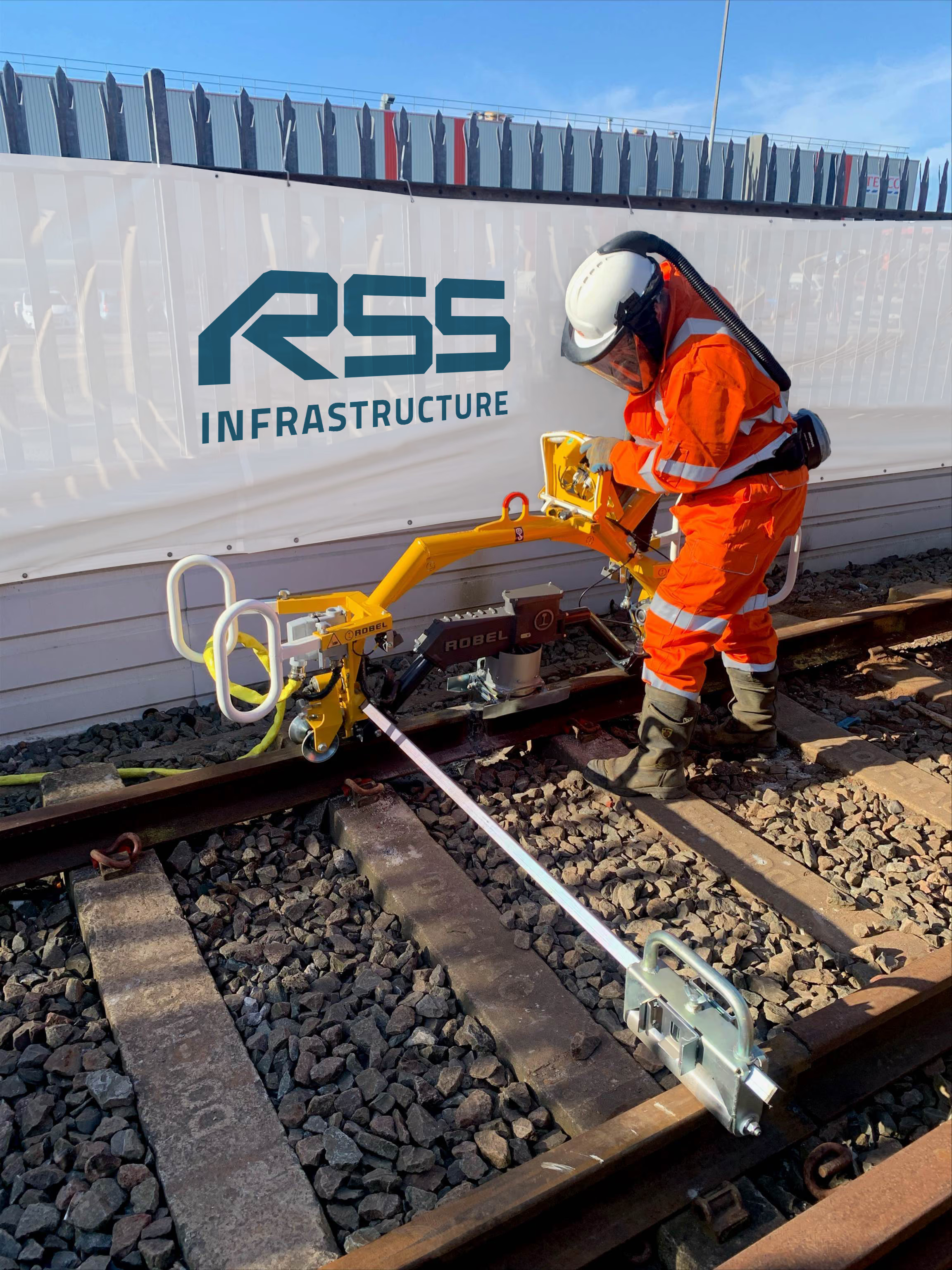
For RSS, the biggest challenge was not just paperwork, but the reality of how work happens on the railway.
Rail projects often involve long shifts, difficult weather conditions and work locations that may be far from vehicles, site cabins, or offices. Paperwork could easily become damaged, lost or incomplete. Even when it was filled out correctly, it still had to be stored safely, transported back from site and processed by administrators.
As Liam explains, RSS is also an SME, meaning they do not have the luxury of large admin teams who can constantly chase forms, correct errors and file documents. Like many businesses in rail, RSS needed a solution that reduced manual admin while supporting compliance and record keeping.
innDex became a key part of solving this problem, helping RSS move away from paper-based processes and towards a more modern, reliable way of managing critical information.
Using innDex in a Way That Works for Rail.
From Liam’s perspective, one of the most valuable aspects of innDex has been its flexibility and ability to work beyond a typical construction use case.
“Rail works very differently to general construction,” Liam explains. “We have specific workflows, terminology, and different reporting requirements, so we needed a system that could reflect how RSS operates as a business”
Tabs have been renamed, forms adjusted and reporting structures configured so that the platform aligns with RSS processes rather than forcing teams to change the way they work.
By shaping innDex around their operational reality, RSS has been able to make the platform feel familiar and practical for users. This flexibility has played a key role in driving engagement and adoption across the business.
Close Calls: Detailed Reporting and Better Visibility.
Close call reporting is a vital part of rail safety, but it works differently compared to a typical construction environment.
“On the railway, a close call can sometimes be addressed immediately, depending on the resources and personnel available on site,” Liam explains. “However, the main priority is to ensure that accurate details are recorded from the outset, so that if escalation to Network Rail is required, the process is efficient and fully compliant with reporting procedures“
RSS uses innDex to capture close calls with the level of detail required for Network Rail, including location-specific information such as engineer’s line references and photographic evidence.
“If it is deemed Network Rail worthy and needs to be closed out, I escalate it to Network Rail myself,” Liam says. “But if I do not have sufficient information, I cannot send it.”
The ability to tailor the close call form is a key advantage. RSS can adjust what fields are included, ensuring operatives capture the exact details required.
“innDex allows you to change the way you want the form to look,” Liam explains. “So we can edit exactly what information we need.”
This improves both the quality of reporting and the speed at which issues can be progressed. It also makes close call reporting easier for operatives, who can submit issues quickly using their phone instead of relying on paper forms.
“It takes two minutes,” Liam says. “You can just pull your phone out in a safe place, take a picture, fill out the details and submit it.”
innDex also provides better transparency through dashboards and reporting, allowing RSS to monitor trends, track open close calls and review activity weekly across the business.
Inspections: Stronger Evidence and Audit Readiness.
RSS also uses innDex to manage a wide range of inspections, from broader HSQE checks to more task-specific inspections.
“When it comes to inspections, the flexibility really stands out,” Liam explains. “We can easily create different types of inspection forms depending on our needs, and everything is stored in one central place.”
Rather than printing multiple documents before going on site, teams can access the forms they need instantly. innDex also supports photo evidence and detailed comments, strengthening inspection records and supporting compliance requirements.
“The ability to capture photo evidence is a big advantage,” Liam adds. “When you’re carrying out an inspection, you should be documenting everything, and innDex makes that really straightforward.”
This becomes particularly valuable during audits. Inspection reports can be downloaded quickly and shared immediately, without the need for scanning or manually searching through paperwork.
“If an audit comes up, it’s much easier to just download the report,” Liam says. “You’re not digging through paper copies, scanning documents, or uploading files, it saves a huge amount of time.”
Asset Management: Bringing Fleet Checks Into One System.
Asset management has been another area where RSS has expanded its use of innDex, particularly in relation to fleet management.
“Our asset management is mainly focused on the vans we use on site,” Liam explains. “We’re managing a fleet of over 100 vehicles.”
Previously, daily vehicle checks were paper-based, creating a major administrative burden. Managing and storing thousands of paper check sheets is difficult and inefficient, especially when evidence needs to be retrieved later.
“Daily vehicle checks used to be entirely paper-based,” Liam says. “innDex has completely removed that process.”
With innDex, the fleet team can view checks in real time, carry out spot checks, monitor faults and track whether issues have been closed out. The system also supports recording service dates, upcoming maintenance requirements, certificates, and mileage, giving RSS a clearer view of fleet health.
Asset management on innDex has seen one of the biggest increases in usage at RSS, becoming a key part of daily operations.
Support That Makes the Difference.
A major part of RSS’s positive experience has been the support provided by the innDex team. Liam highlights the responsiveness and partnership approach as a key factor in keeping engagement high.
"If I send Ben, our innDex Customer Success Manager an email or drop him a message, he'll reply within the hour," Liam says. "Whether it's queries or training sessions, the support has always been there when we've needed it."
Liam also mentioned how valuable the regular catch-ups have been, saying they have helped innDex feel more like a partner than just a software supplier. Having consistent contact and ongoing support has made the rollout smoother and strengthened engagement across departments.
Results: What innDex Has Delivered for RSS.
innDex has become a core operational tool for RSS Infrastructure, supporting safety reporting, inspections and fleet oversight across a nationwide workforce.
The platform has reduced reliance on paper, improved reporting quality and significantly cut down the time spent managing, transporting and administering paperwork. It has also strengthened visibility across departments, allowing RSS to track trends, identify areas for improvement and access audit-ready evidence quickly.
As Liam summarises, innDex has given RSS the ability to turn information into insight. “Data is knowledge and knowledge is power,” he says. “It enables the business to target where weaknesses are and then focus to improve those areas.”
With adoption now approaching 90% and continuing to rise, RSS is demonstrating how innDex can flex beyond a standard construction setup and support the specific demands of rail, while improving efficiency, engagement and compliance across the business.