.svg)




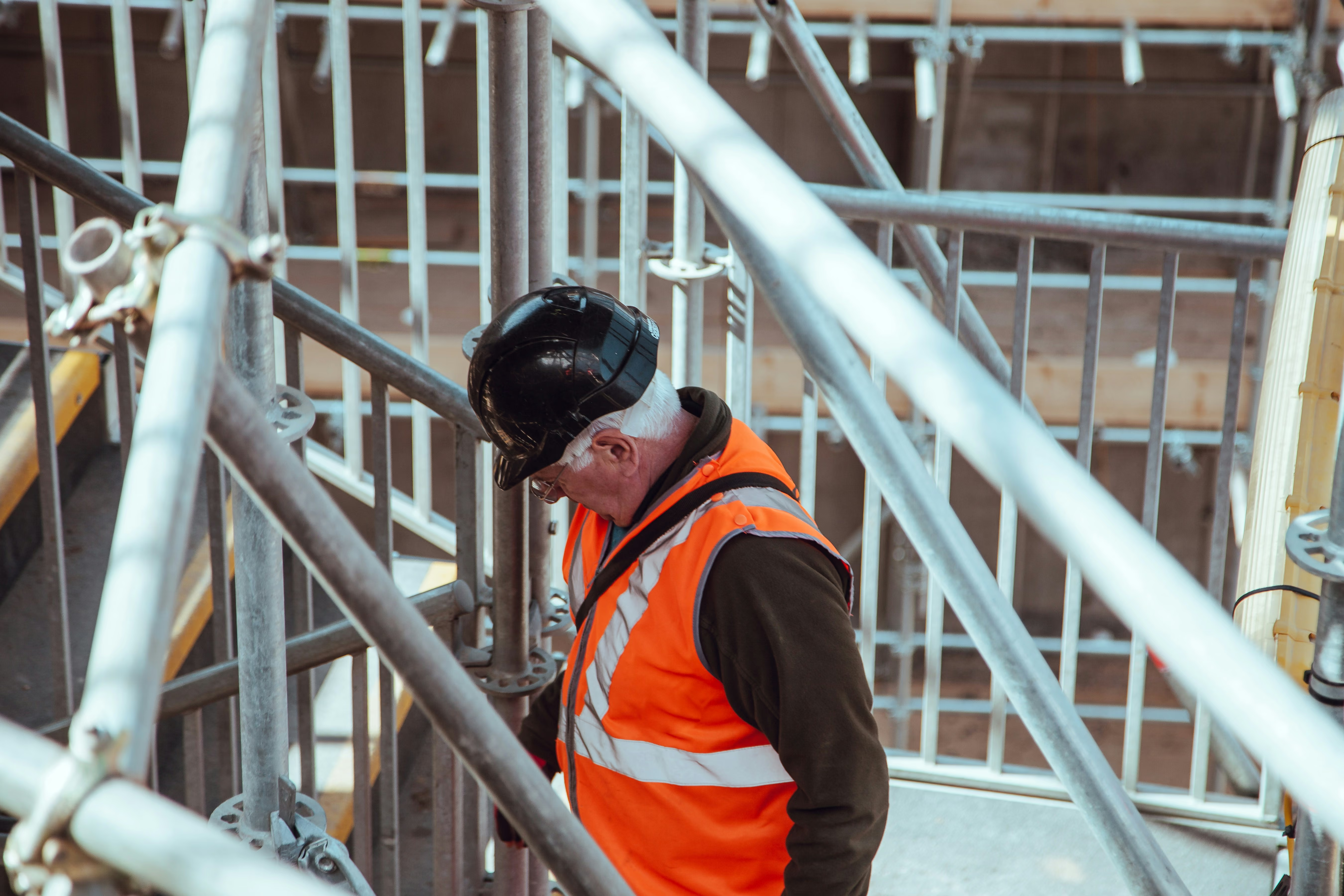
Construction remains the sector with the highest number of worker deaths in Great Britain. That's why health and safety isn't a paperwork afterthought. It's core to running a construction site. This guide covers what health and safety in construction means, why it matters, who's legally responsible, and the regulations governing UK sites. It also covers the main hazards, and the practical systems that keep people safe: risk assessments, documents, PPE, inspections and culture.
What Is Health and Safety in Construction?
Health and safety in construction combines law, management systems and day-to-day practice to stop people getting hurt on the job. It covers two connected ideas. "Safety" means preventing accidents and physical injuries such as falls, crush injuries and electric shocks. "Health" means preventing longer-term harm (from things like asbestos, dust, noise, vibration and manual handling).
Construction sites are unusually dynamic. They change daily. Multiple trades work alongside one another. Heavy plant operates close to people, and work often happens at height, in excavations, or near live services. So managing health and safety in a construction environment means constantly spotting hazards, assessing the risk, and putting controls in place before work starts, and as conditions change.
Good health and safety management pulls everything together into one, coherent approach to controlling risk on site. Increasingly, that approach is a digital one. Platforms like innDex bring inductions, RAMS, briefings, inspections and incident reporting into one connected system, so duty holders don't have to manage their piece alone.
Why Is Health and Safety Important in Construction?
The most important reason is human. Construction consistently accounts for the largest number of worker fatalities of any industry in Great Britain. According to the Health and Safety Executive (HSE), 25 construction workers were killed in work-related incidents in 2025/26, the highest of any sector. Behind the headline fatalities sits a much bigger burden of harm. HSE's Construction statistics in Great Britain (published November 2025) estimates around 50,000 construction workers a year self-reported a non-fatal workplace injury (Labour Force Survey, averaged over 2022/23 to 2024/25), equivalent to about 1 in 40 workers. And 79,000 workers suffer from work-related ill health (new or long-standing), with musculoskeletal disorders accounting for around 53% of cases.
There's also a powerful health case that's easy to overlook, because it moves slower. Occupational disease kills far more construction workers over time than site accidents do. HSE reported 2,146 mesothelioma deaths in Great Britain in 2024 through past exposure to asbestos, and many of these deaths link back to past exposure in construction and related trades.
The business case backs this up. Injuries and ill health cost the construction sector an estimated £1.4 billion a year (HSE, 2023/24), around 6% of the total cost of all work-related ill health and injury across Great Britain. Poor safety performance also means project delays, lost productivity, higher insurance premiums, reputational damage, and difficulty passing client pre-qualification. Where duties are breached, it means enforcement action, fines and even imprisonment.
Finally, there's the legal case. Health and safety duties in construction are statutory. Failing to meet them is a criminal offence, and the courts can hand down unlimited fines and custodial sentences for serious breaches. In short, managing health and safety well protects lives, protects the business, and keeps you on the right side of the law.
Who Manages Health and Safety on a Construction Site?
Under CDM 2015, health and safety on a construction project is shared out across defined "duty holders." Each one has a distinct role, and if one fails, the whole chain weakens. Here's how the HSE defines the duty holders and their main duties.
The client
The client is the organisation or individual commissioning the project. Commercial clients sit at the top of the chain and hold real influence. They must make suitable arrangements for managing the project, appoint the other duty holders, allocate enough time and resources, share relevant pre-construction information, check that the principal designer and principal contractor carry out their duties, and provide welfare facilities.
The principal designer
On projects with more than one contractor, the client must appoint a principal designer. This is a designer (an organisation or individual) with the knowledge, experience and ability to plan, manage, monitor and coordinate health and safety during the pre-construction phase. They identify, eliminate or control foreseeable risks through design decisions, make sure designers cooperate, and prepare and pass on relevant information, including the health and safety file.
The principal contractor
Also required where there's more than one contractor, the principal contractor is appointed to plan, manage, monitor and coordinate health and safety during the construction phase. They liaise with the client and principal designer, prepare the construction phase plan, organise cooperation between contractors, make sure site inductions happen, take reasonable steps to prevent unauthorised access, consult workers, and provide welfare. In practice, this is where digital tools earn their keep. Platforms like innDex let principal contractors deliver site-specific inductions before operatives arrive, control who can access the site, and keep a live record of who's on site at any moment. That's direct evidence of these CDM duties being met, not a paper trail assembled after the fact.
Designers and contractors
Designers must eliminate, reduce or control foreseeable risks that could arise during construction and later use and maintenance, and pass on information to the rest of the team. Contractors plan, manage and monitor the work under their control so it happens without risks to health and safety, and coordinate with others. On single-contractor projects, the contractor prepares the construction phase plan.
Workers
Workers (those working for or under the control of contractors) must take care of their own and others' health and safety, cooperate with their employer and other duty holders, report anything likely to endanger anyone, and be consulted on matters affecting their health, safety and welfare.
Common Risks and Hazards in Construction
The pattern of harm on UK sites is well documented in HSE statistics, and it stays remarkably consistent year on year. These risks don't just affect people, they hit the business too. Here are some of the main causes of death and serious injury, and what they can cost an organisation:
Falls from height
This is the single biggest cause of fatal injury in construction, and across all industries. Falls from height accounted for 31 of the 126 worker deaths across all sectors in Great Britain in 2025/26, around a quarter of the total. In construction specifically, falls from height still account for more than half of all fatalities, an average of 21 deaths a year over the five years up to 2024/25 (RICS Construction Journal). Scaffolds, ladders, roofs, fragile surfaces, mobile towers and unprotected edges and openings are recurring factors. A fatal fall triggers an automatic HSE investigation, and gaps in edge protection or working-at-height procedures are among the most commonly prosecuted failings, with penalties running into hundreds of thousands of pounds.
Being struck by moving or falling objects and vehicles
Construction sites are busy, dynamic places where plant, cranes, deliveries and materials move constantly. Being struck by a moving vehicle or object is one of the leading causes of construction fatalities after falls. Poor traffic management and pedestrian segregation are frequent findings after these incidents, and they're just as frequently cited in enforcement notices and fines.
Trapping and collapse
Excavation and trench collapses, and the collapse of structures during demolition or alteration, can cause fatal crushing injuries. Trenches and temporary works need proper design, support and inspection. When they're not, the fallout includes stop notices, project delays and, in the most serious cases, corporate manslaughter charges.
Electricity
Contact with overhead power lines and underground cables, and unsafe work on electrical systems, cause serious burns, electrocution and fatalities. Service strikes during excavation are a particular civil-engineering risk, one that cable-avoidance tools and permits can reduce. Beyond the safety risk, a service strike often means damaged infrastructure, costly network downtime, and a bill passed straight back to the contractor responsible.
Health hazards
The slower-burning risks cause the greatest long-term toll. Asbestos remains the biggest single cause of work-related death in the sector through past exposure. Respirable crystalline silica and construction dust cause lung disease. Noise causes hearing loss. Vibration causes hand-arm vibration syndrome. And manual handling drives the musculoskeletal disorders that make up a large share of construction ill health.
Slips, trips and falls on the same level are also among the most common causes of non-fatal injury. Alongside falls from height and manual handling, they account for a large share of the roughly 50,000 non-fatal injuries construction workers sustain each year.
The cost to the business
These hazards don't just put people at risk, they put the business at risk too. A fatal or serious injury can trigger an HSE investigation, and where duty holders have breached their responsibilities, the result can be unlimited fines, prosecution and even custodial sentences.
Beyond enforcement, incidents mean project delays, higher insurance premiums, and reputational damage that can be hard to shake off during client pre-qualification. This can have huge financial implications for a business, and for an industry that runs on repeat business and trust, that reputational hit often outlasts the incident itself.
Health and Safety Equipment and PPE
Personal Protective Equipment (PPE) is essential on construction sites, but it's deliberately the last resort in the hierarchy of control, used only once higher-order controls (elimination, substitution, engineering and administrative measures) have been applied and a residual risk remains. The HSE is clear that PPE protects only the wearer, relies on being worn correctly, and does nothing to remove the underlying hazard. That's why it sits at the bottom of the hierarchy.
Typical construction PPE includes:
- Head protection - hard hats/safety helmets to protect against falling objects and impact.
- High-visibility clothing - so plant and vehicle operators can see workers clearly.
- Safety footwear - with toe protection and midsole protection against crushing and penetration.
- Gloves - appropriate to the task (cut, chemical, vibration or thermal protection).
- Eye protection - goggles or safety glasses to protect against dust, debris and splashes.
- Hearing protection - where you can't easily control noise at source.
- Respiratory protective equipment (RPE) - correctly face-fitted, for dust, silica, asbestos and fumes.
Under the Personal Protective Equipment at Work Regulations, employers must provide suitable PPE free of charge, make sure it's compatible, maintained and correctly stored, and train workers in its use. The 2022 amendment extended these duties to "limb (b)" workers, casual and certain contract workers, so they must be protected on the same terms as employees.
Inspections, Audits and Compliance
Getting the systems right on paper is only half the job. Construction safety depends on checking that controls are actually working on site.
Site inspections are the routine, frequent checks (daily walkarounds, scaffold and excavation inspections, plant checks and pre-use equipment inspections) that catch problems before they cause harm. Many are legally required at set intervals or before use. innDex's Inspections & Audits tool lets teams build custom checklists for these routine checks, complete inspections from a phone or tablet on site, and assign any findings as tracked actions with a clear closeout trail. That replaces the static, easy-to-lose paper checklist with a live record of what's been checked and what still needs fixing.
Health and safety audits go deeper. They're systematic reviews of whether the safety management system itself is adequate and being followed, usually against a defined standard or checklist. Inspections ask "is this ladder safe today?" Audits ask "is our whole system for managing work at height sound?"
Compliance monitoring ties these together, using checklists, corrective actions and records to show that duties are being met and to drive continuous improvement. High-risk activities such as hot works, working at height and excavation typically also require a permit to work - a formal sign-off from a competent, authorised person before work starts, and a closeout once it's finished. Digitising this process, like innDex's Permits tool does, keeps the same familiar client permit forms but adds an auditable approval and closeout trail. That means there's a clear record of who authorised the work, and confirmation it was safely closed out.
Many clients also require contractors to hold third-party accreditation before they can tender. The best known is CHAS (the Contractors' Health and Safety Assessment Scheme), a founding member of SSIP (Safety Schemes in Procurement). SSIP is the umbrella body, backed by the HSE, that allows mutual recognition between assessment schemes, so contractors aren't repeatedly re-assessed against the same core criteria. Other SSIP members include SMAS, SafeContractor and Constructionline.
Building a Health and Safety Culture
Regulations and documents set the floor. Culture determines the ceiling. A strong health and safety culture turns rules into instinctive behaviour, and it's consistently the difference between sites that merely comply and sites that genuinely protect people.
Practical building blocks include:
Leadership and commitment
Visible, consistent commitment from directors and site managers signals that safety is a genuine priority, not a box-ticking exercise.
Training and competence
From site inductions to the CSCS card scheme and task-specific training, a competent workforce is the foundation of safe work. innDex's Competency Management tool integrates directly with the CSCS Smart Checker, verifying certification cards against the CITB database during induction. So only workers with valid, in-date competencies get approved onto site, and expiry alerts mean nobody gets caught out further down the line.
Worker engagement
Consulting workers, acting on their concerns, and making it easy to report hazards and near misses builds trust and surfaces risks early. Rising near-miss reporting is often a sign of an improving culture, not a worsening one. This is exactly the shift a digital observations tool is designed to support. Replacing the old paper "post-box" hazard card with a mobile-first submission process, including the option to report anonymously, tends to increase how much gets reported, not just how it's recorded.
Toolbox talks
Short, focused, interactive briefings (typically 10 to 15 minutes at the start of a shift) that address the specific hazards of the day's work and give workers a voice. Where innDex's Briefings tool delivers and tracks these digitally, attendance is pulled automatically from who's clocked in and logged against each worker's record. So there's no separate paper register to chase up afterwards.
Behavioural safety
Programmes that observe and reinforce safe behaviours, and tackle the everyday shortcuts and complacency that precede incidents.
Culture is built slowly and lost quickly. Consistency, talking about safety when nothing has gone wrong, not just after an incident, is what makes it stick.
Frequently Asked Questions
Who is responsible for health and safety on a construction site?
Responsibility is shared across lots of roles under CDM 2015. The client sets the arrangements and appoints the team. The principal designer manages risk in the pre-construction phase. The principal contractor manages the construction phase. Designers and contractors control the risks in their own work, and workers must work safely and cooperate. On a day-to-day basis, the principal contractor coordinates safety across the site.
What qualifications do construction workers need?
Most site operatives need a valid CSCS card, which shows they have the training and qualifications for their role. For an entry-level (Green) Labourer card, the standard route is to complete the Level 1 Award in Health and Safety in a Construction Environment (an RQF qualification) and pass the CITB Health, Safety and Environment (HS&E) test. Skilled trades, supervisors and managers need higher-level qualifications and corresponding cards. Digital induction platforms can verify these cards automatically during onboarding. innDex's integration with the CSCS Smart Checker cross-checks card details against the CITB database in real time, flagging expired or mismatched competencies before induction is approved.
Is a health and safety policy legally required?
Yes, if you have five or more employees. Section 2(3) of the Health and Safety at Work etc. Act 1974 requires such employers to have a written health and safety policy setting out their statement of intent, organisation and arrangements. Employers with fewer than five employees don't have to write it down but must still manage health and safety.