.svg)




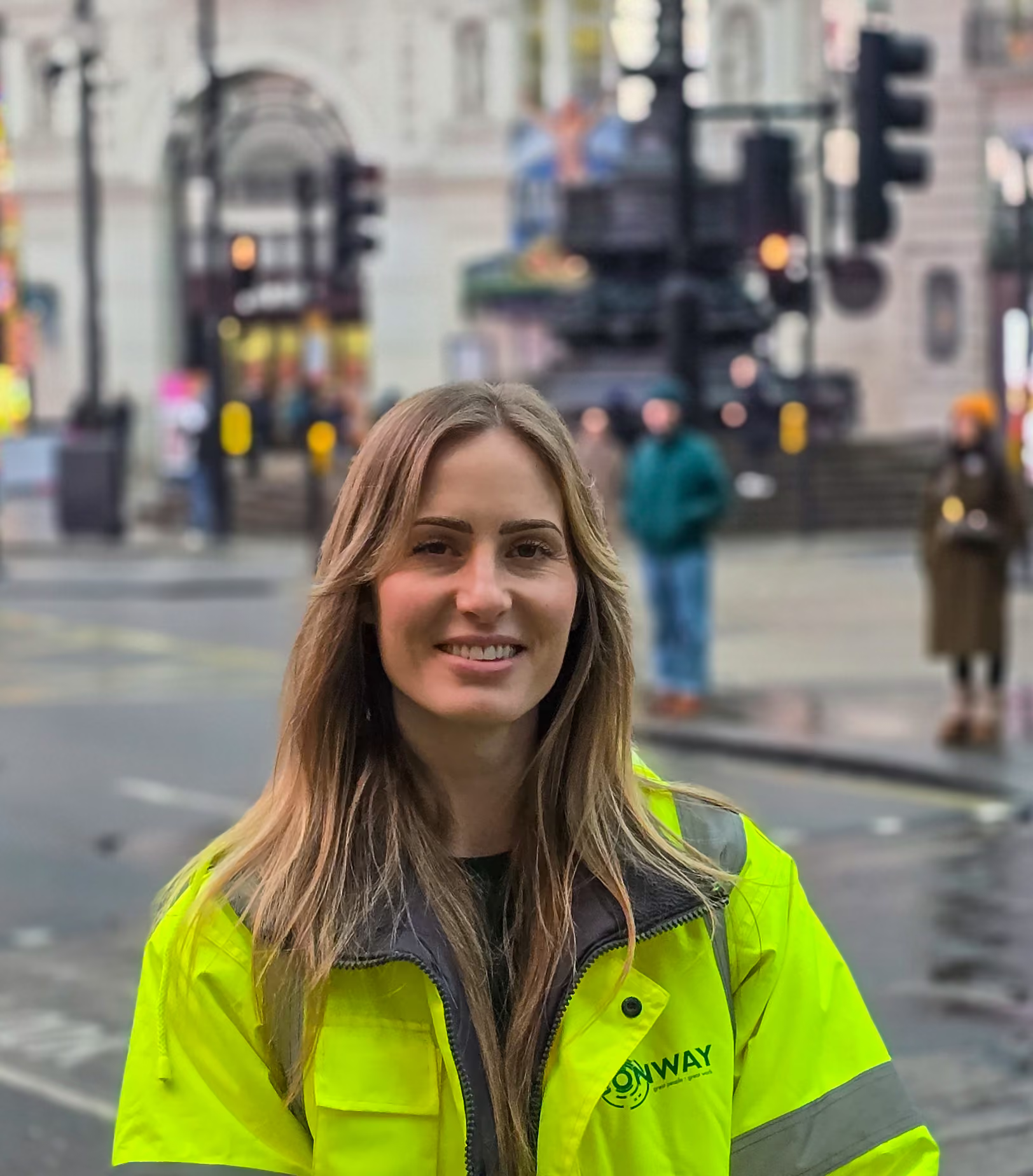
FM Conway operates across one of the most demanding project environments in the infrastructure sector. At any given moment the business is running dozens of projects, from short burst asset maintenance lasting just a few weeks to multi-year structural refurbishments involving complex phasing, multiple stakeholders and intricate engineering. For Emily Heritage, a Project Manager working within the structures team at FM Conway, this range is not the exception. It is an everyday reality.
"We do a huge variation of work," she says. "It can range anywhere from a couple of weeks to a couple of years depending on the scheme, the size of the structure and the stakeholders involved."
FM Conway handles the refurbishment of existing highway infrastructure assets including bridges, tunnels and underpasses, as well as public realm work across parks and shared spaces. Current schemes include a refurbishment of public toilets across multiple London locations, a project that sounds straightforward on the surface but involves replicating a complex design suite across multiple unique structures each with its own challenges.
It is a challenge that sits at the heart of high-volume project delivery: how do you maintain quality, consistency and accountability when the work never stops and no two jobs are quite the same? This article explores how Emily approaches that question in practice, covering where inconsistency tends to creep in, how to strike the balance between standardised process and on-site flexibility, what proactive performance management actually looks like and why culture is just as important as any system or tool.
Opportunities to Build Greater Consistency.
When managing multiple concurrent projects, the natural pressure points tend to form around the same areas: communication, quality checks and site behaviour. Without the right systems and processes in place it is easy for things to slip.
Visibility is the key word here. A clear, overarching view across live projects, teams can maintain consistent paperwork, site processes and quality checks ensuring issues are identified early and standards remain high.
Strong operational control comes from consistent attention to the details thorough plant checks, meaningful temporary works inspections, and clear induction into expected standards. Across multiple short-duration projects running simultaneously, these everyday disciplines create the foundation for safe, efficient, and reliable delivery.
When processes are built in and readily available and when management has visibility across multiple projects, it becomes much quicker to spot where inconsistencies are emerging and where something needs to change.

The Non-Negotiables.
Across all project types and durations there are areas where there is no room to compromise. Health and safety sits at the top of that list. At the end of the day this is about making sure that everyone goes home safely, and company-wide policies need to be built into every project to help make that happen and to reduce the margin for human error, where checks might otherwise not get done.
Permits to dig, hot works permits, scaffold inspections and competency verification for everyone on site are baseline expectations on every project regardless of whether it lasts three days or three years. The ability to audit these remotely has been a significant step forward, giving senior teams desktop visibility of compliance across live sites without needing to be physically present.
That said, remote oversight has its limits. There is no substitute for actually being on site and seeing what is happening. Desktop auditing complements physical presence rather than replacing it.
Standardisation and the Space to Adapt.
One of the more interesting tensions in high-volume project delivery is the relationship between standardised process and on-the-ground flexibility. Too rigid and you risk slowing teams down or creating a box-ticking culture. Too loose and consistency falls apart.
The right approach is one of setting clear expectations while preserving room for professional judgement. Processes should create an environment rather than a script. "It's more about setting the tone of the project and keeping things consistent. But there does need to be a certain amount of flexibility allowing project managers to intervene or create new solutions."
In practice this means teams need freedom to respond to the unexpected: standing down works when a subcontractor's method statement does not provide sufficient information, demobilising equipment at short notice when a client needs a space cleared or adjusting programmes when weather creates unacceptable risk for workers at height. These are the judgement calls that no checklist can fully anticipate.
What standardisation provides is a reliable baseline, so that when a team does need to deviate they are doing so from a known and documented position rather than improvising from scratch. And when those deviations reveal something worth changing, they can be fed back into the baseline for the benefit of the whole business rather than remaining locked in the experience of one individual.
Making Good Practice Stick.
Embedding best practice into daily delivery is a cultural challenge as much as an operational one. The risk with well-designed processes is that they become hollow routines, something people move through rather than genuinely engage with.
The technology that supports consistency on site, the digital forms, the audit tools, the reporting dashboards, is only as good as the thinking behind how people use it. Periodically it is worth re-auditing the quality of auditing itself: not just checking whether forms have been completed but whether the people completing them are genuinely engaging with the risks they are meant to be assessing. "Very regularly we have to almost re-audit ourselves and ask, is this person actually considering how this might harm somebody, or are they just going through the motions?"
This is where leadership plays a decisive role. The culture on site is shaped by how managers show up and whether the people around them understand the real stakes behind the paperwork. In environments as inherently hazardous as highway infrastructure and structural works, complacency tends to grow precisely where the work feels repetitive and familiar. People can get complacent and forget what the real risks are simply because things do not go wrong every day. That does not mean the potential is not there.
Measuring What Matters Before It Becomes a Problem.
Proactive performance management in a high-volume environment requires data that can surface trends before they become incidents.
Close call reporting is one of the most useful tools available. Near misses and identified hazards, from slip and trip risks to unsafe conditions noticed by workers on site, provide a continuous feed of information about what is actually happening across projects day to day. Patterns in that data reveal where something systemic needs to change rather than where someone simply had a bad day.
Workforce behaviour offers another layer of signal. People arriving late or leaving site early can be an early indicator of something shifting in the culture on site, worth paying attention to before it becomes a bigger problem.
Quality checks on materials and subcontractor performance add a further dimension. If a particular project is consistently underperforming or a contractor's programme is repeatedly pushed back, that trend becomes visible across projects. "It definitely makes you think when you're remobilising another site. If you've started to see downward trends with a particular subcontractor, you'd reconsider who you're using for those works." That kind of insight can then inform decisions across the wider portfolio, improving not just one site but the standards applied to future ones.
Quality on Short-Duration Works.
There is a common assumption in the industry that smaller or faster jobs mean lower quality. The pressure is real but the assumption does not have to be.
The risk is most acute on cyclical or repetitive works, where teams are delivering the same thing again and again across different locations and clients. Familiarity creates a kind of efficiency that can turn into corner cutting if leadership is not actively reinforcing standards. "If a workforce is being told they've got to be out by Friday, there's a very strong possibility that's going to impact the quality because the deliverable becomes the time frame, not the standard."
The more constructive response is to use data to have a different kind of conversation with clients. Drawing on evidence from previous similar projects makes it possible to demonstrate that a few extra days of delivery time can significantly extend the lifecycle of an asset and reduce future maintenance costs. It shifts the relationship from contractor to trusted adviser, and it is a much stronger position to be in than simply absorbing time pressure and hoping quality holds.
Learning Across a Portfolio
With so many projects running concurrently the potential for accelerated learning is significant. The challenge is capturing it consistently and sharing it across teams, and this is an area the industry as a whole could do better on.
In a division where the work is so varied, lessons from one project do not always transfer neatly to the next. But where there is repetition, as with a scheme replicating the same design suite across multiple sites with the same designers and contractors, the opportunity is clear. Learnings from one phase feed directly into the next, risks that emerge unexpectedly get built into future programmes from the start and the whole delivery gets smarter as it goes.
More broadly, the industry tends to focus on what went wrong rather than what worked. Sharing successes across a team, whether that means a contractor who delivered ahead of schedule or a stakeholder approach that landed particularly well, is just as valuable as dissecting failures. Ensuring that knowledge travels with people rather than disappearing when a project closes or a team changes is one of the harder problems in high-volume delivery. It is also one of the most important ones to solve.
The Bigger Picture
When it comes to managing high volumes of short-duration work the temptation is to keep your head down and focus on delivery. But the learning that comes from doing this kind of work at scale is genuinely powerful and it only becomes powerful when it is shared.
"It's very easy to stay in your own bubble, and if you're very successful in what you're doing there can even be a resistance to spread that and help others come up with you." The bigger picture means focusing not just on individual project delivery but on elevating the people around you and driving the business forward through shared knowledge. The technology to capture and surface that knowledge is improving rapidly. The culture to use it well is something that has to be built deliberately, one conversation at a time.